


Rewilding Portugal and the Greater Côa Valley
5 reading timeWhat Can This Rewilding Movement Offer (Eco)Tourism?
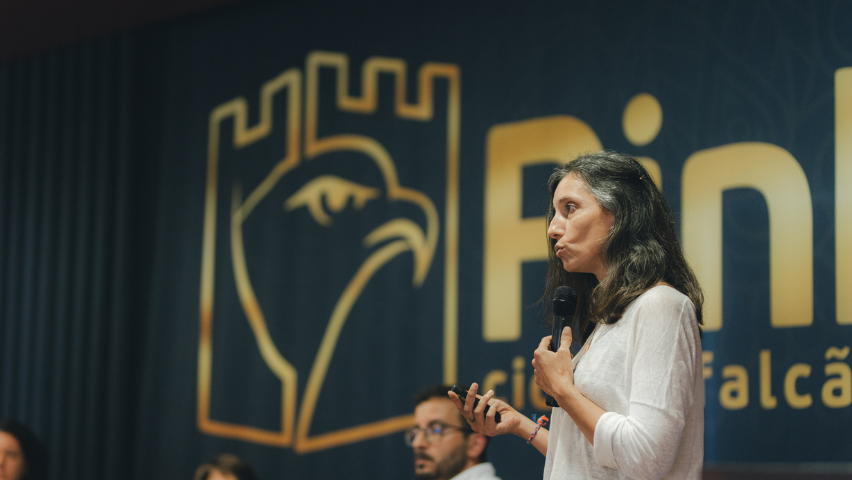
Rewilding Portugal had been on my radar for a while, and the invitation to join one of the panels at the Experience(Côa) Congress on nature tourism in rewilding contexts came at just the right moment. Fresh off the Re-Rural Caravan and before diving into the Communication Plan for the new ID Sudoeste consortium, I was especially inspired and connected to the topic.
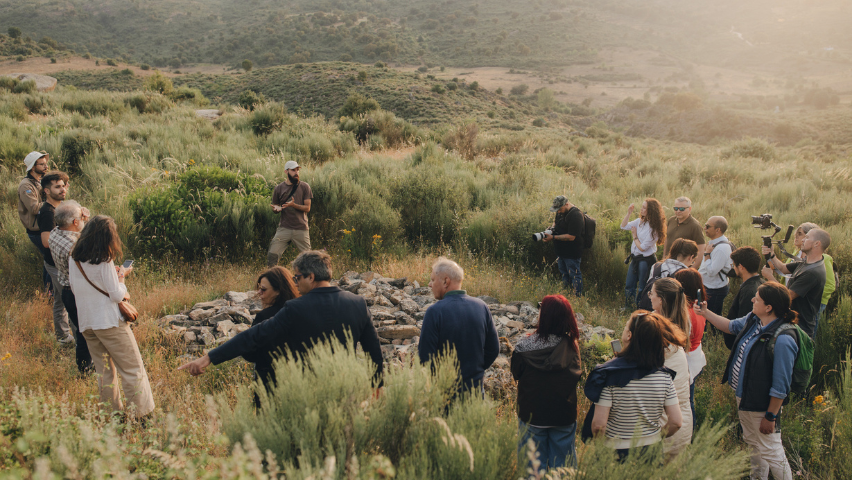
The event took place in Pinhel, in the Greater Côa Valley, and I began my talk by recalling a visit I made years ago to Foz Côa. The nighttime tour of the ancient engravings left a lasting impression. It was one of the most powerful experiences I’ve had connecting with a wild Portugal — 30,000 years ago, before we became sedentary, agricultural, landscape-transforming beings, yet already capable of stories that physically reached across time. That visit was a kind of time travel, similar to what I experience on the cliffs of Costa Vicentina, where I can easily envision a primal, ancient, wild Portugal.
I didn’t know Rewilding Portugal well, but a quick read of the materials at the event entrance made things clear: the framing may differ, but the fundamental questions are the same. With a focus on the UN Decade on Ecosystem Restoration (2020–2030), we still have a long way to go. The ICNF (Portuguese Institute for Nature Conservation) continues to fall short in its role in nature conservation — let alone ecosystem restoration. The idea that we can’t keep slicing up landscapes with administrative boundaries aligns closely with the One Health approach: everything is connected, and we need to restore the health of ecosystems we are inherently part of. The economy of the future — which begins now — must be rooted in nature and its balance.
In Search of the True Ecotourist
This organisation’s core idea is to reintroduce key species and practices that help ecosystems regenerate. Top predators and large herbivores rebalance the food chain and landscape and, importantly, have significant tourism potential. As Marco Ferraz put it: “We have a fantastic natural setting, but we’re missing the actors.” The cultural dimension, involving local communities, was frequently mentioned — aligning the local calendar with that of emblematic species could unlock unique potential.
I witnessed a region starting with ecosystem and landscape regeneration and then moving toward tourism — a sequence we in the Southwest are aiming to follow. It seems like a good path, but neither dimension is easy to manage, and tourism can be far more predatory than wolves or lynxes.
From my side, I raised questions and concerns — particularly the need to deepen the connection between place and visitor, seeking out the true ecotourist: the one who is committed to the territory and wants to give something back. In contrast, the “fast ecotourist” collects destinations like trophies, arriving and departing without leaving a positive impact (often not even for themselves), and sometimes leaving behind unintentional negative traces. As Manuel Franco said, the difference between greenwashing and greenwishing lies in intent — but the results may be similar.
We are speaking about a paradigm shift — not an easy one and one that requires wisdom. I reiterated Rota Vicentina’s commitment to continued investment in meaningful cooperation, not just locally, but with projects, organisations, and collectives across the country. Change is urgent, and a coordinated strategy of collaboration can accelerate regeneration, connection, and the revitalisation of affected regions.
Rewilding Portugal, part of the wider Rewilding Europe initiative, shows impressive capacity for action, capitalisation, communication, and mobilisation. Reality is on their side: we must restore our connection to ecosystems — and the ecosystems themselves. Whether through vast wilderness areas or micro-bioreserves, every effort counts.
"Young People Want to Act!"
A key moment for me came with João Almeida from the European Young Rewilders, who was asked how young people view all the issues discussed at the event. His response was clear: “Young people aren’t interested in reports and dossiers — they want to act, to do.” Involving young people — or even following their lead — is essential, as they bring a fresh, critical perspective, free from the old patterns that got us here.
In the Southwest, one of the wildest areas is the coastal strip — and it’s under serious threat. Native forests offer hope, and can be economically productive in diverse, sustainable, and immediate ways. We may lack top predators, but we do have large herbivores, which could gradually be replaced with hardy, native breeds. Agroforestry and silvopastoral systems represent a promising path forward. Local food — responsible, healthy, and full of the taste of this land — can lead the way.
Let’s restore hope in a green, vibrant, connected, welcoming, abundant future. It’s entirely in our hands.
Photos: Cláudio Noy
Presided over the Rota Vicentina Association for 12 years and now leads Strategic Relations and Innovation — which is to say, a focus on cooperation and creativity.
Our suggestions
Search by category
