


Measuring the Carbon Footprint: Project Pegada + Sustentável
6 reading timeRota Vicentina Takes Another Step in Promoting Responsible Tourism
Rota Vicentina is many things—it is also a network of businesses that inspire, support, and challenge each other to find, step by step and collectively, better tourism practices for the future of our region.
This time, Salema Eco Camp challenged us with a proposal to share their internal system for calculating carbon footprints with associated accommodation businesses, preferably our partners. This model stems from an investment the company has made over the past four years.
Titled “Pegada + Sustentável”, this project will offer five Rota Vicentina businesses, selected throught an application process, the opportunity to calculate their carbon footprint for 2024 through a consultancy service at a symbolic cost.
The consultancy service will include calculating CO₂ equivalent emissions in accordance with the Greenhouse Gas Protocol (GHG), and producing a report with the study’s findings.
The association ZERO, a nationally renowned and credible entity, will oversee this work, endorsing the initiative for its coherence, relevance, and transparency.
Rota Vicentina supports this project by defining the itinerary and promoting the initiative and the participating businesses, publicly showcasing an exemplary project in responsible tourism and the good practices of its promoters.
Committed to promoting best practices that contribute to building a truly sustainable development model, Rota Vicentina aims to highlight ideas and projects that enhance environmental and economic responsibility in our territory and align with the goals that inspire us.
Calculating the Carbon Footprint
The topic of carbon footprint calculation holds significant value in the global market. However, sometimes the best solution is to adopt a simple and honest way to account for the relevant information about the impact of our choices, whether they are more or less conscious. Once we have this information, it becomes much easier to make decisions and act to bring about meaningful change, knowing that it’s impossible to change everything at once and that no business operates without impact.
“Calculating greenhouse gas emissions (commonly referred to as carbon calculation or carbon footprint) for a business project is crucial to assess the impacts of its activities and identify which operational areas contribute most to its carbon footprint. These key areas are where management changes can potentially generate the most positive impacts,” says Ângela Ferreira of Salema Eco Camp.
Calculating a business’s carbon footprint is not an end in itself but the beginning of a transformative process that integrates “a broader strategy for climate mitigation and sustainability”, as noted by Filipe of Associação ZERO.
Congratulations and thank you to Salema Eco Camp and the collaborative spirit of Rota Vicentina’s partner businesses!
Read three short interviews below
Marta Cabral, Rota Vicentina: “We prioritize showcasing good practices”
1 – As Rota Vicentina is an organization closely tied to sustainable tourism, how do you view this initiative?
We are excited because we’ve reached a point where we can finally provide more support to companies, communities, and specific cases that bring significant added value to the network. In this case, the initiative came from Salema Eco Camp, and we simply embraced and supported it by coordinating with other businesses in the network. We also highly value showcasing good practices and inspiring cases, whether isolated or cooperative, which are always welcome, both for us and for those who follow us.
2 – Will it continue?
Without a doubt. We hope this example will inspire other businesses. There is a wealth of knowledge and innovation within this network, and we want to invest in sharing, inspiring, and supporting it as a locally rooted association striving for more responsible ways to promote tourism.Ângela Ferreira, Salema Eco Camp: “Understanding the sector’s climate impacts”
1 – How did this project come about?
This project was born from an idea by one of Salema Eco Camp’s partners, Joaquim Lourenço, who, concerned about ecology, sustainability, and the economic future of tourism in Rota Vicentina, challenged me to calculate the carbon footprint of five associated accommodations within Rota Vicentina to promote awareness within the network.
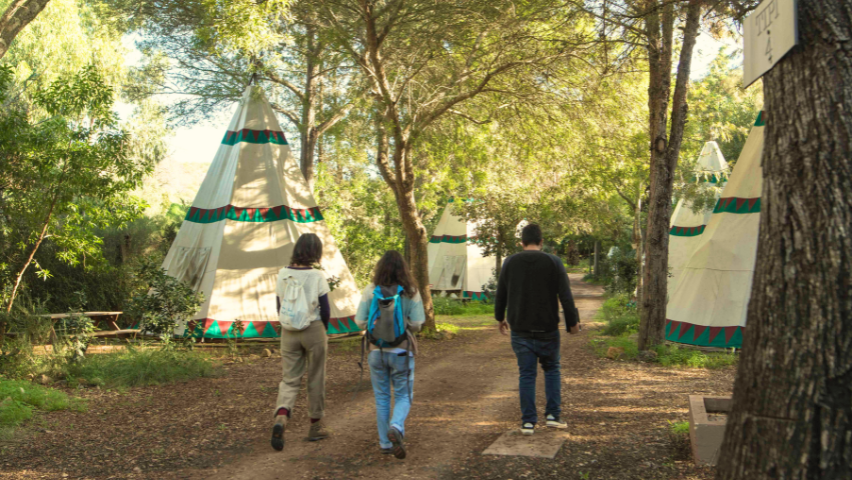
I gladly accepted the challenge and added the aspect of making this journey on foot, as sustainability is part of how I live and exist on this planet.
2 – What goals does the project aim to achieve?
One goal is to measure the carbon emissions associated with the tourism activities of the five businesses to understand the sector’s climate impacts. Another is to establish a commitment to sustainability with Rota Vicentina and its associates for a sustainable future. Lastly, the project seeks to achieve responsible tourism, specifically in two areas: businesses should not just keep the results of the calculation but should work to reduce emissions at their source through management model changes and invest in conservation, restoration, or climate-impact projects.Ricardo Filipe, Associação ZERO: “Carbon calculation should be seen as a starting point”
1 – How does ZERO view the Carbon Calculation movement in tourism?
ZERO acknowledges the importance of measuring carbon emissions from human activities, including tourism, as a crucial step to understanding and reducing the sector’s climate impacts. However, we emphasize the need to approach this subject with rigor and responsibility. Simply calculating and offsetting emissions should not be seen as a substitute for effectively reducing emissions at their source.
Currently, there are no carbon offset solutions that simultaneously remove carbon from the atmosphere effectively and remain economically viable. Thus, tourism entities pursuing offsets to achieve the coveted “carbon neutrality” label risk falling into the trap of “greenwashing.”
Mechanisms like voluntary carbon markets have significant weaknesses, such as the lack of guarantees for secure and permanent carbon removal. In the tourism context, this means efforts to calculate and offset emissions must be accompanied by real and verifiable commitments to reducing the environmental impact of operations, promoting sustainable transport alternatives, energy efficiency, waste reduction, and practices that minimize natural resource use.
ZERO encourages the tourism sector to adopt measures that prioritize decarbonization instead of relying solely on offsets that may perpetuate high-impact environmental practices. The carbon calculation movement should be seen as a starting point for transforming the sector within a broader strategy for climate mitigation and sustainability.
2 – What was ZERO’s involvement in this project?
ZERO was involved in validating, monitoring, and reviewing the carbon footprint calculations for the five participating tourism businesses.
Margarida is half-Porto native, half-Alfacinha. She’s from Porto, but lived for many years in Lisbon. She comes from the world of journalism, where she began her career, then moved into institutional communications and press relations. A lover of words, cats, and movies, she’s discovered the Alentejo as a destination full of revelations.
Our suggestions
Search by category
