


Litter on the Fishermen’s Trail: A problem that can no longer be ignored
11 reading timeRota Vicentina launches an awareness and alert campaign
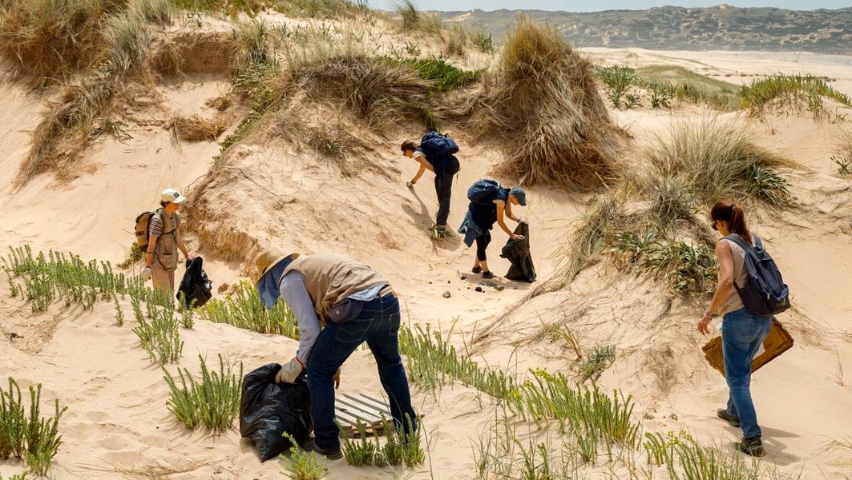
The increase in the number of hikers on the Fishermen’s Trail and an apparent change in their profile have brought new challenges to the territory. Litter left behind by walkers has risen exponentially — mainly toilet paper and wet wipes — contaminating the landscape and degrading the fragile ecosystems that make up the natural heritage of the southwest coast. For Rota Vicentina, this phenomenon calls for an urgent, coordinated, and multi-pronged response. An awareness and alert campaign is underway.
Following a trend already observed in other parts of the world, the Fishermen’s Trail has, over the past two years, experienced a sharp increase in litter along the route.
This has become a recurring issue raised by trail users and one that, according to Sara Serrão, President of the Rota Vicentina Association, stems from various factors: “There are more people travelling, more interest in experiences, more exposure on social media, and greater visibility for Rota Vicentina — particularly the Fishermen’s Trail, which exerts an irresistible fascination for travelers from Central and Northern Europe and even other regions of the world.”
But that’s not all. Another trend has also been identified — that of day-trip excursions, with large groups coming to walk for just one day. In this quick consumption of “star stages” of the Rota, many visitors “not only don’t realize they are in a protected area — the Southwest Alentejo and Vicentine Coast Natural Park (PNSACV) — but are also unaware of the natural values that exist here and must be preserved,” she adds.
This raises several questions, both practical — “how to deal with this, how to prevent it, how to solve it” — and reputational.
“In thirteen years of Rota Vicentina, we’ve never reached this point,” stresses Sara Serrão, who believes this issue has the potential to compromise “the goodwill and positive reputation that Rota Vicentina has worked hard to build.”
Along with it, all the efforts made for the region in terms of “sustainable nature tourism development, reduction of seasonality, creation of business and investment opportunities, and population retention in a territory once considered depopulated.”
A multimodal campaign
So where to start? For the President of Rota Vicentina, there is a great deal of work to be done in terms of community engagement and environmental communication about what can and cannot be done in a protected area.
In addition to the awareness and litter collection activities carried out throughout the year with volunteers, Rota Vicentina is finalizing an informative and awareness campaign about litter on the trails, which will include a range of materials and formats:
– An appealing and educational leaflet
encouraging hikers to carry and collect their waste, available in six languages (German, Spanish, French, English, Italian, and Portuguese), to be distributed widely among members, walkers, operators, international fairs, and the general public;
– A digital map
marking and locating existing public toilets and water points along the trail;
– Strategic signage along the Fishermen’s Trail encouraging waste collection, to be placed near tourist bus stops, caravan clusters, and main walking access points;
– An online awareness campaign
across all Rota Vicentina communication channels, including the blog and social media.
This is the beginning of a long road ahead — one where there is “huge room for the Institute for Nature Conservation and Forests (ICNF), as the managing authority of the Natural Park, to take on a more active and engaged role,” says Serrão, expressing “great expectations” for the newly approved Co-management Plan of the Natural Park. She concludes: “We only care for what we know, and in that regard, there is still much room for improvement.”
Threatened ecosystems
What impact does litter left behind by hikers have on such a unique territory as the one traversed by the Fishermen’s Trail?
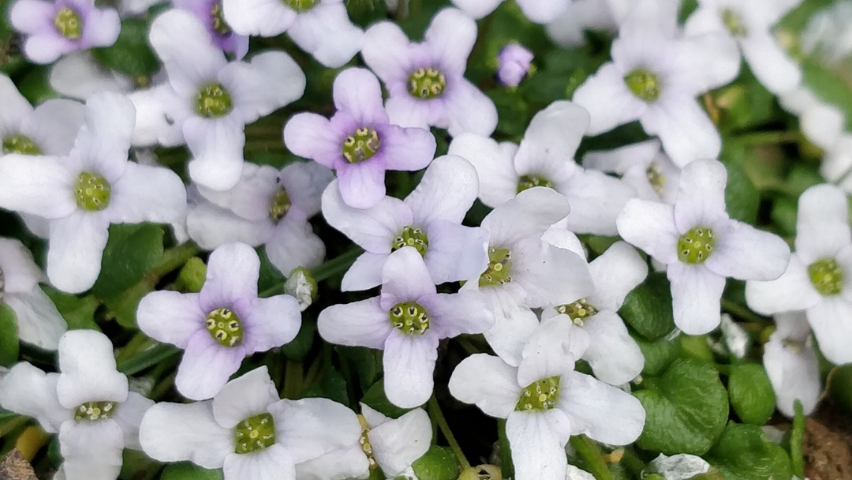
The uniqueness of the southwest coast goes far beyond its landscapes. This is one of the richest regions in Portugal in terms of flora, as biologist André Carapeto, founder of the Flora-On portal and one of the country’s leading voices in botany and environmental issues, reminds us.
Carapeto is clear: “The southwest coast is one of the most special areas for flora in Portugal.” Here, he explains, we find about one-third of the entire flora of mainland Portugal — around 1,100 identified plant species, nearly 50 of which are endemic to the region, meaning they exist nowhere else.
These species germinate on the cliffs, particularly in the older dunes that form behind them.
And because they are extremely well adapted to sandy soils with low organic matter, they are the first to suffer the impact of litter, trampling, and human waste, which alter the soil’s composition and make it more suitable for generalist species.
“We’re talking about habitats that are sometimes so tiny or so degraded that only a small patch remains, losing their competitive advantage as the soil becomes colonized by species that can grow by roadsides, in cities, forests, or abandoned fields,” he says.
He concludes: “When we replace these small, unique patches of the southwest coast with communities that could exist anywhere else, we lose the biological value and the exclusive natural heritage that make this region so special.”
Restoring dunes and saving seeds
The visible litter along the Fishermen’s Trail is only the most obvious symptom of a broader problem of human pressure on the dunes — one that also involves trampling, illegal crossings to the beaches, invasive species, and the impact of agricultural activity on these ecosystems, among other factors.
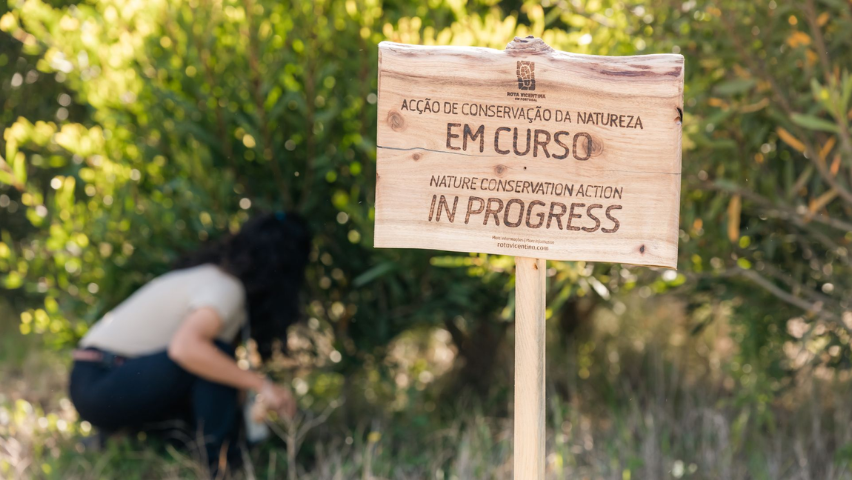
Understanding the scale of what’s happening is crucial to act effectively on the ground. That’s exactly what Mossy Earth , Rota Vicentina’s partner organization, is doing through the Dune Restoration Project, which will initially begin with two pilot sites: Alteirinhos and Foz dos Ouriços.
“The goal is to map not only the pressures affecting these areas but also the habitats and key species that exist there. We’ll be using drones camera traps, and bioacoustic devices to record bird sounds, for example,” explains Francisco de Sousa, project coordinator, with Rota Vicentina as a partner.
The aim is to carry out a systematic survey of the entire coastal stretch between Malhão and Odeceixe, identifying priority areas for intervention — whether to combat invasive species (such as acacias and ice plants) or to consolidate and define the trails.
The project also includes, in the long term, collecting seeds of dune species for nursery propagation. “We’ll conduct trials to learn how to propagate these species and create a stock of plants sourced from these areas so that, after interventions, they can be replanted — reducing erosion risks and increasing competition against invasive species,” he concludes.
Trash doesn’t disappear — it contaminates.
Waste Decomposition Time on the Trails
*Note: The dune environment — dry, sandy, and low in organic matter —
significantly slows down decomposition. Wind and temperature variations may accelerate fragmentation
but not full degradation.
Fontes:
Degradation Rates of Plastics in the Environment – https://pubs.acs.org/doi/10.1021/acssuschemeng.9b06635
The Content of Heavy Metals in Cigarettes and the Impact of Their Leachates on the Aquatic Ecosystem – https://www.mdpi.com/2071-1050/14/8/4752
Micro e nanoplásticos: um macroproblema – http://hdl.handle.net/10400.1/19968
Environmental toxicity and decomposition of polyethylene – https://doi.org/10.1016/j.ecoenv.2022.113933
Margarida is half-Porto native, half-Alfacinha. She’s from Porto, but lived for many years in Lisbon. She comes from the world of journalism, where she began her career, then moved into institutional communications and press relations. A lover of words, cats, and movies, she’s discovered the Alentejo as a destination full of revelations.
Our suggestions
Search by category
