


The backstage of a Nature Conservation Activity (part 1)
6 reading timeLong-leaved Wattle: Planning and Intervention Strategy in Rota Vicentina’s Pilot Areas
Each intervention area has its own particularities, and each team does as well! There are different ways to take care of our landscape and intervene in unique and threatened areas, which can vary according to the characteristics of the target species, the intervention area, and also the group of people who do it. In the pilot areas of Rota Vicentina, when planning our interventions for each nature conservation activity, we take into account not only the needs detected on site but also the size, sensitivity, and experience of the volunteer group.
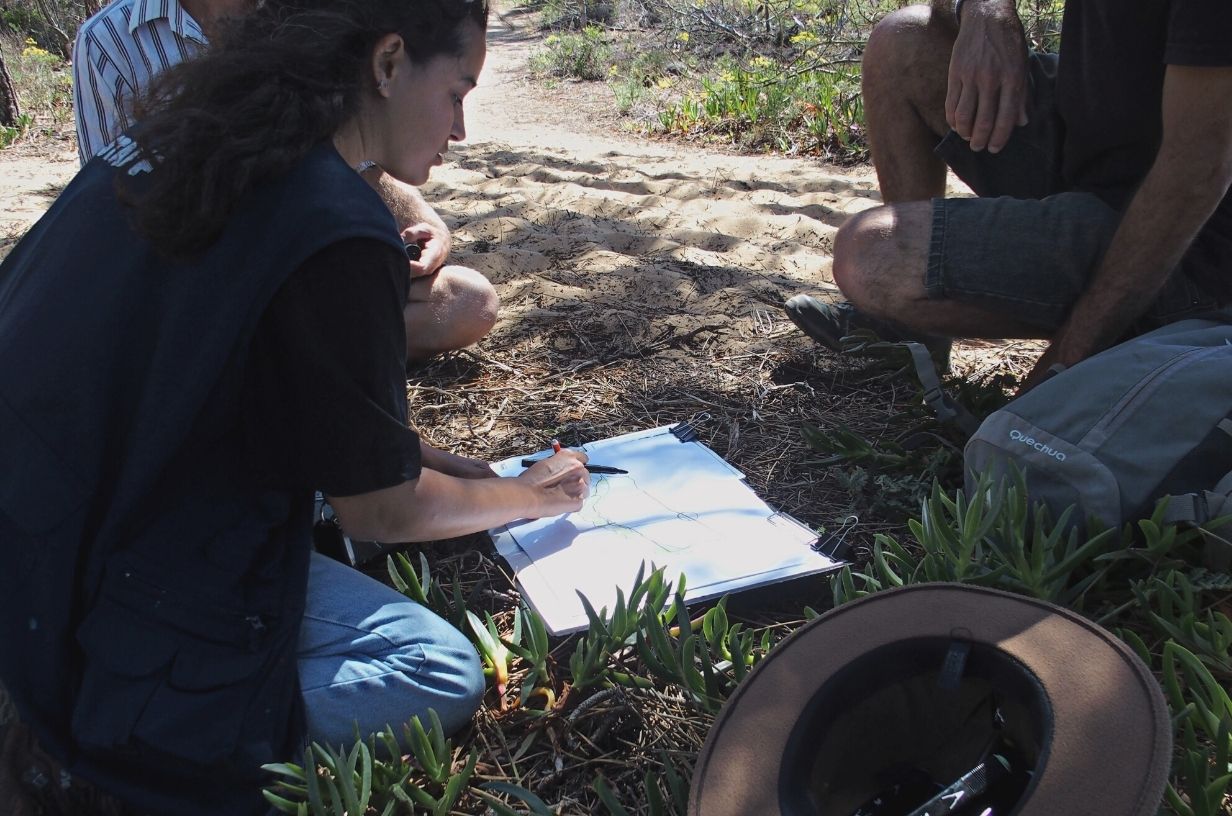
Regarding the Long-leaved Wattle (Acacia longifolia) – one of the invasive species of the Costa Alentejana and Vicentina – or other species of Wattle, the planning and intervention strategy is done in three ways:
1. PREVENTIVE REMOVAL
Preventive removal consists of walking transects* in an orderly manner, carefully observing various passage sections where invasive species do not appear to have settled or formed significant patches.
*Transects are lines or strips of land along which certain phenomena or events are recorded, executed, or studied. It is a way of mapping the intervention or study area and, in this case, removing the invasive species.
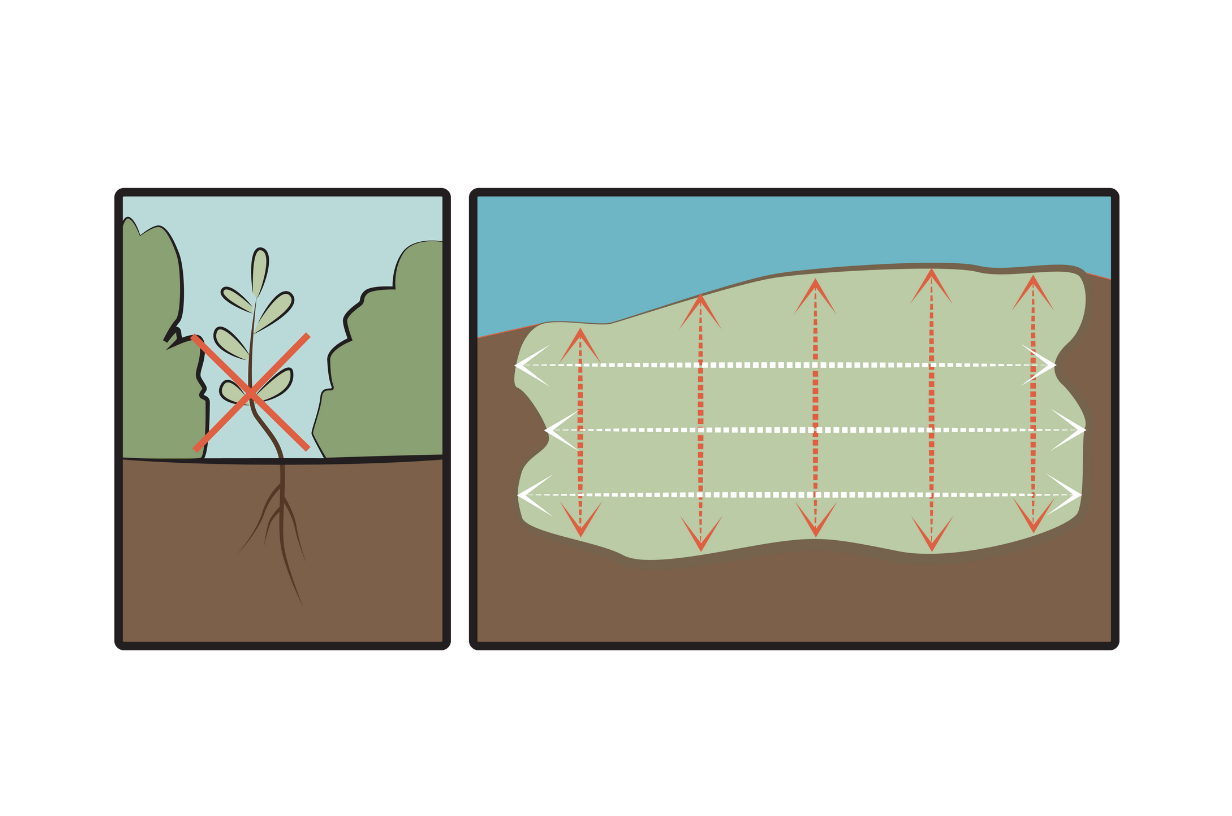
This type of intervention allows the scouting team to detect and remove isolated wattle trees in an early development phase, covering a wider or more sensitive area and preventing the appearance and expansion of new invasion patches.
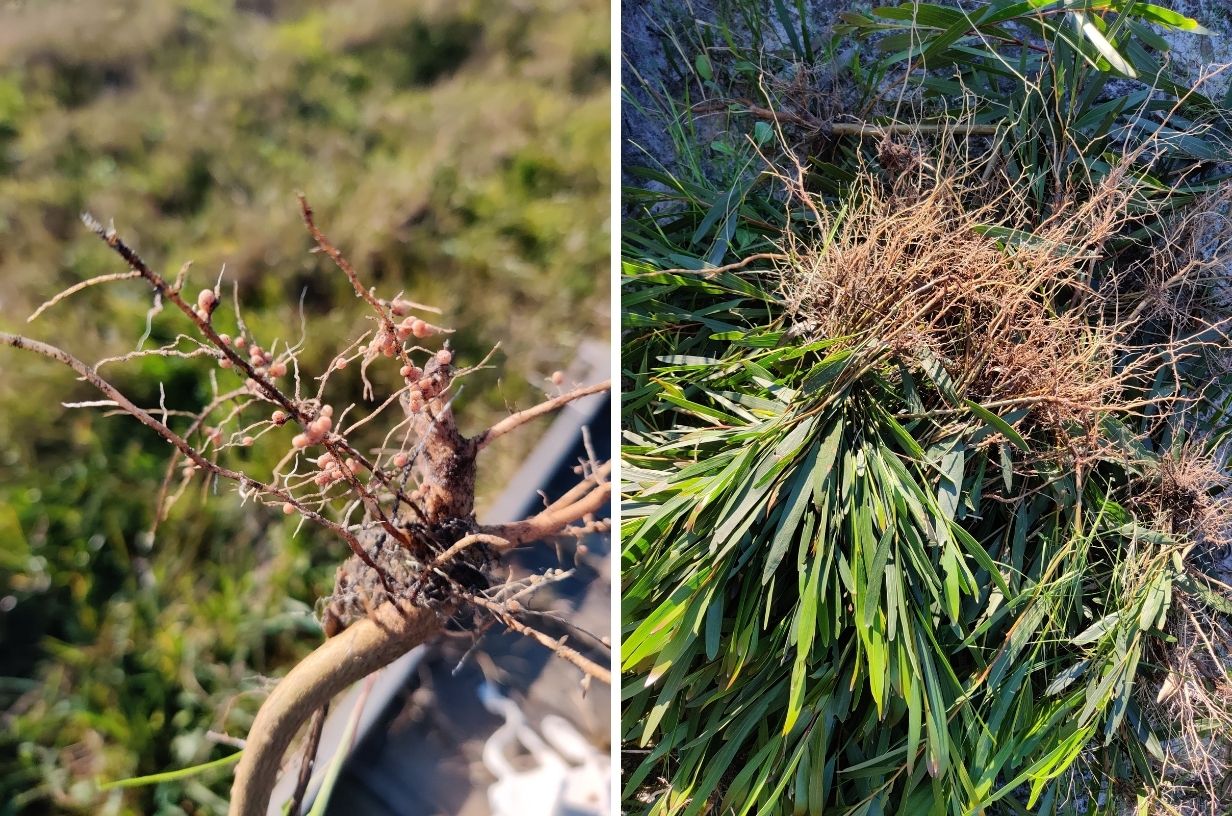
When carrying out preventive removal, it is important to pay attention to the intervention’s impact. The team must not only be very familiar with the target species for removal, able to identify it from a distance and in its various stages of evolution, but also know the most appropriate control techniques to apply in each situation. Additionally, it is important that the intervention team can distinguish native vegetation and, most importantly, identify threatened or more sensitive flora to possible trampling. All of this can be learned in the nature conservation activities regularly organized by the Rota Vicentina Association.
To minimize any negative impacts, some precautions are necessary.
❌ Avoid stepping on or disturbing threatened or more sensitive flora
❌ Avoid walking through dense vegetation areas and, whenever possible, choose existing trails, areas without vegetation, or covered with invasive plants (e.g., sour fig)
❌ Do not leave the collected invasive plants in contact with the soil
❌ Do not transport invasive plants from the removal site
❌ Do not transport seeds or plants with seeds
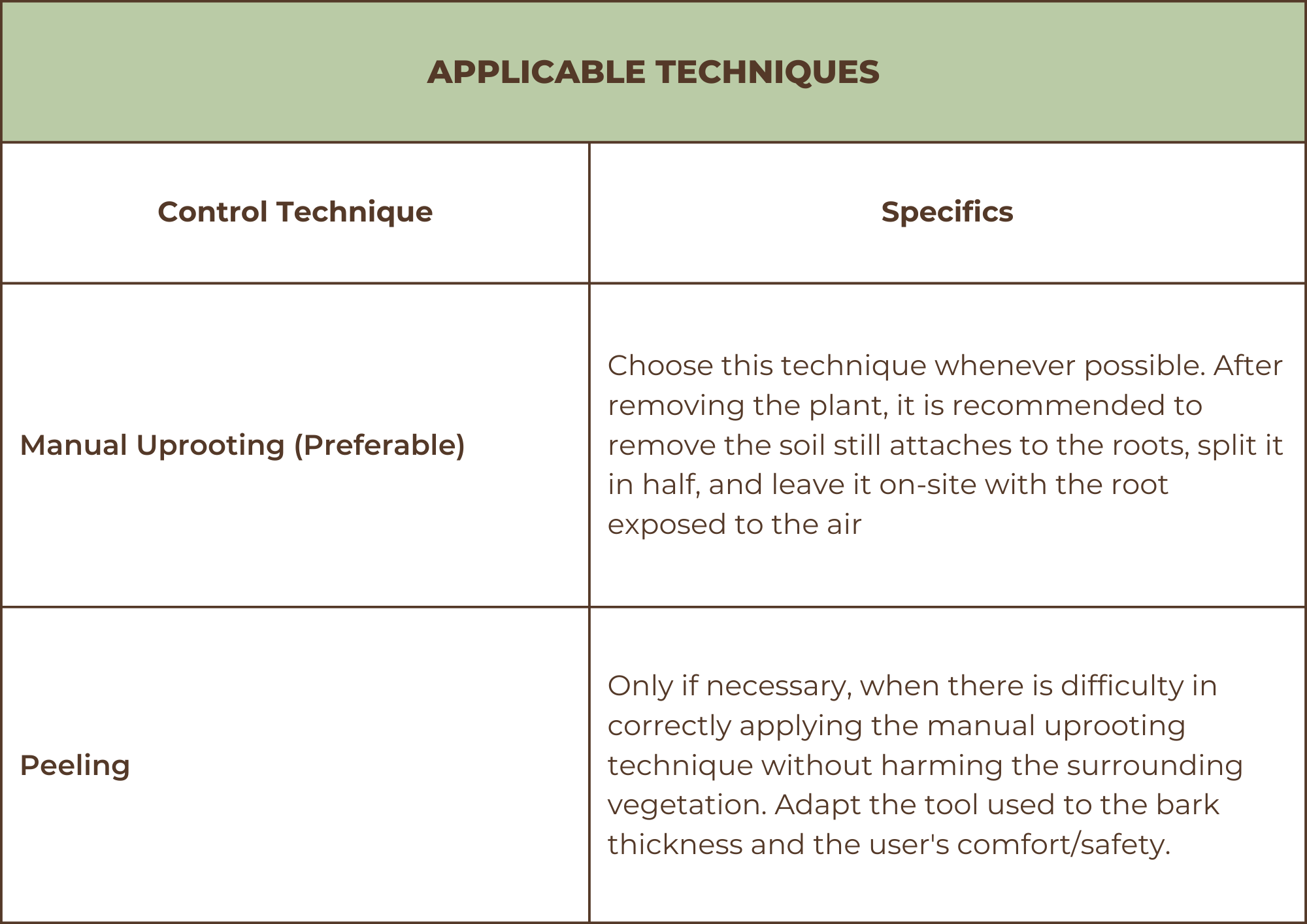
2. CONTROL AND NEUTRALIZATION OF ISOLATED PATCHES
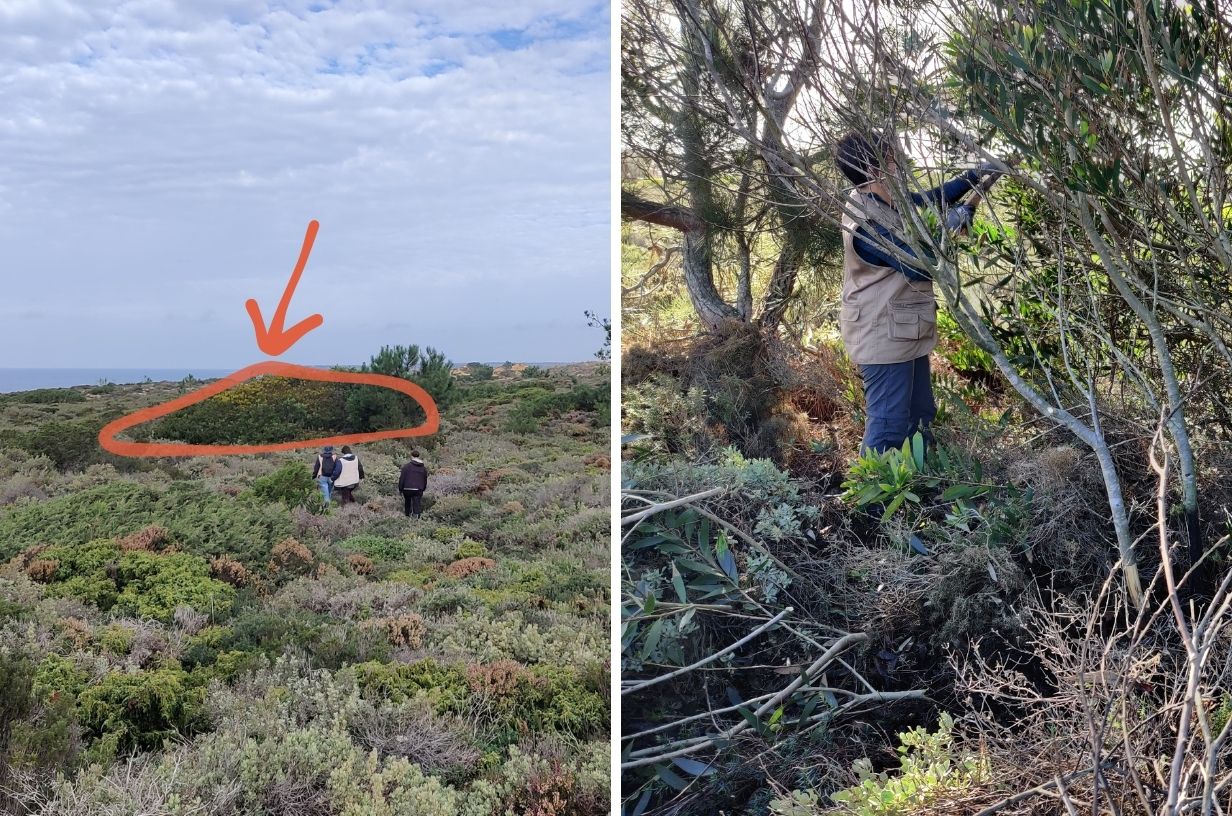
When dealing with isolated patches, the objective is to identify and detect new invasive areas and intervene to reduce, weaken, or if possible, neutralize them. These patches, as the name suggests, are clusters of small and medium-sized acacias that result from seed transportation from the primary invasion fronts, along with non-preventive removal. In these clusters or isolated nuclei, seed-producing plants are often present, which makes intervention in these areas important to effectively reduce their invasive potential.
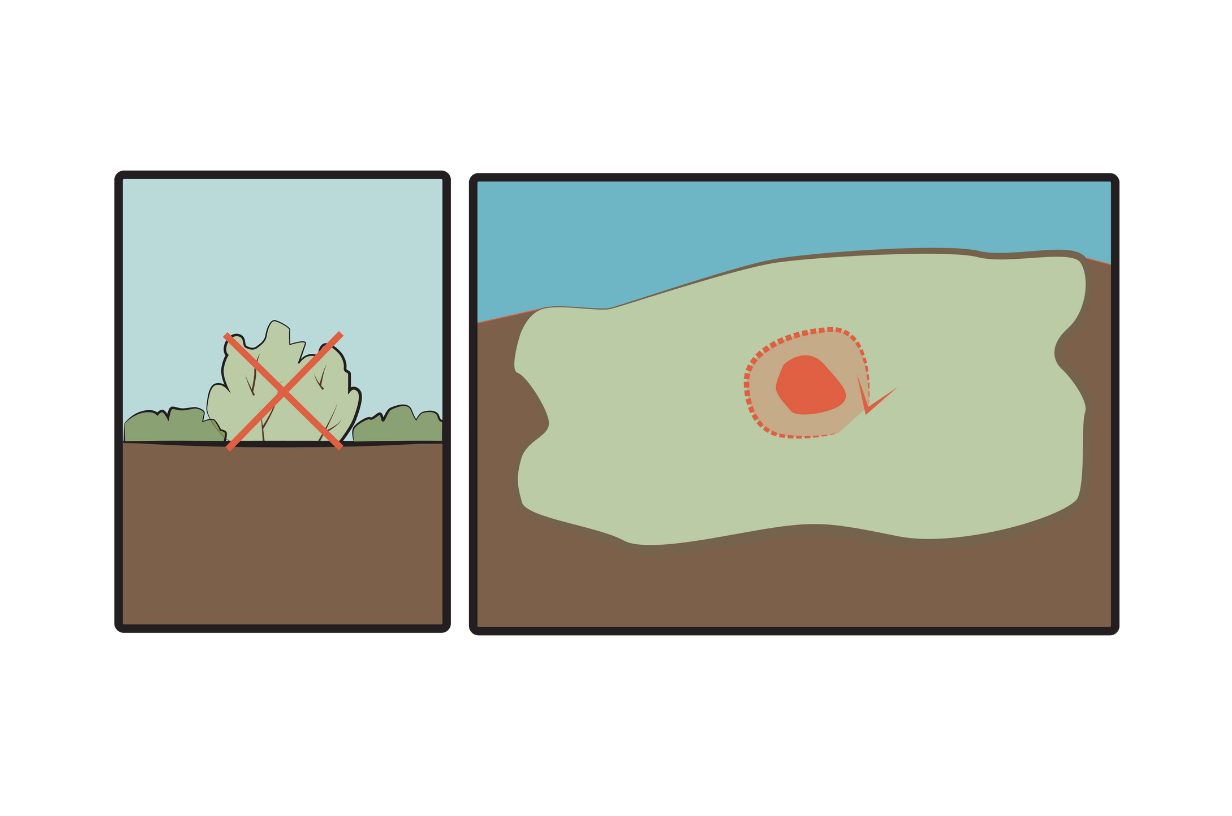
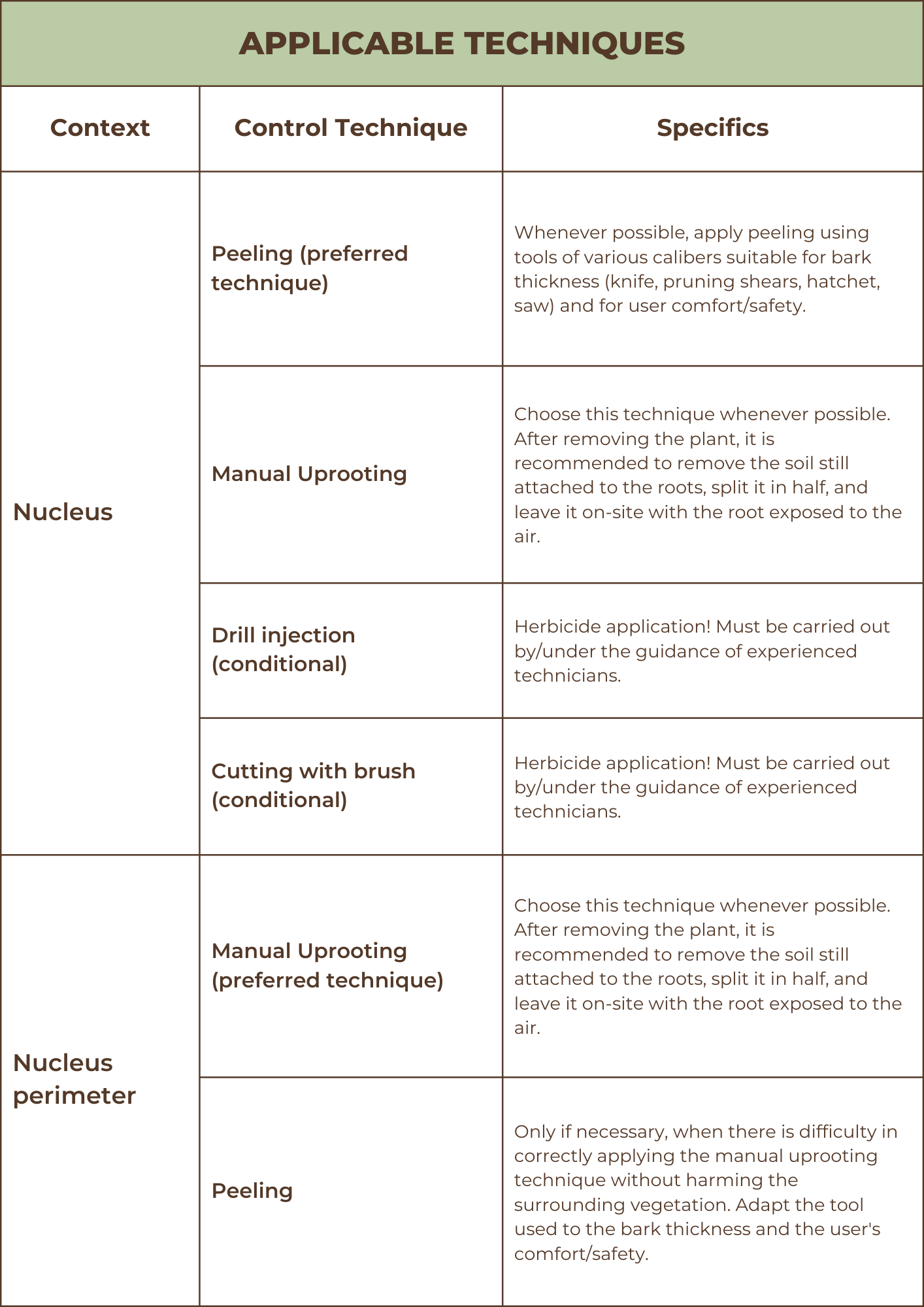
To intervene in isolated patches, the team can undertake two tasks: preventive removal of the nucleus perimeter and neutralization of the invasive hotspot. This involves focusing efforts on larger plants within the target cluster.
BEWARE!
❌ Avoid stepping on or disturbing threatened or more sensitive flora
❌ Avoid walking through dense vegetation areas and, whenever possible, choose existing trails, areas without vegetation, or covered with invasive plants (e.g., sour fig)
❌ Do not leave the collected invasive plants in contact with the soil
❌ Do not transport invasive plants from the removal site
❌ Do not transport seeds or plants with seeds
❌ Cut/thin only as much as necessary to reach the main trunk
❌ Be especially careful of the presence of rooting branches in the ground.
3. CONTROL AND FRAGMENTATION OF THE MAIN INVASION FRONT
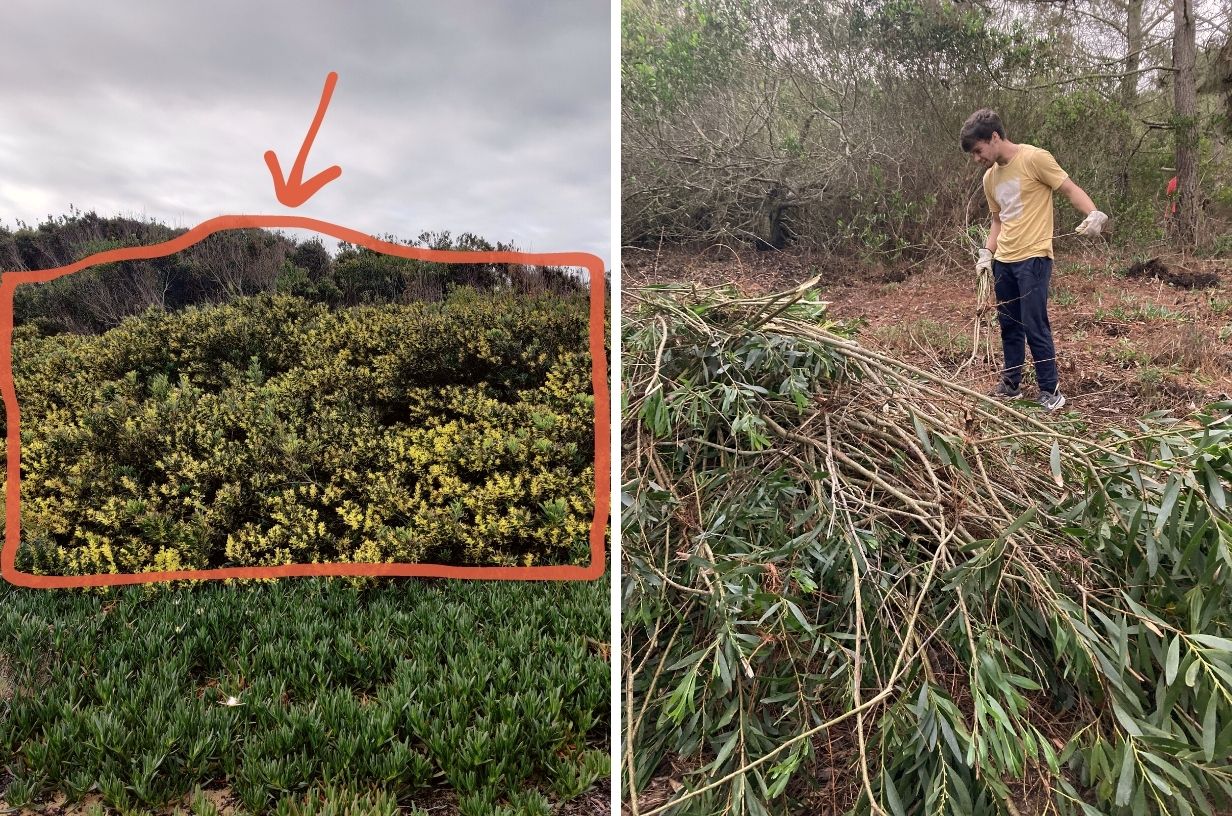
When intervening in the main invasion front, the goal is to break and push back the main fronts. These “fronts” are large monospecific patches that dominate the landscape and are often impenetrable. Observing these patches or walking inside them makes it clear that native species cannot develop during the full invasion phase, resulting in significant reduction in biodiversity.
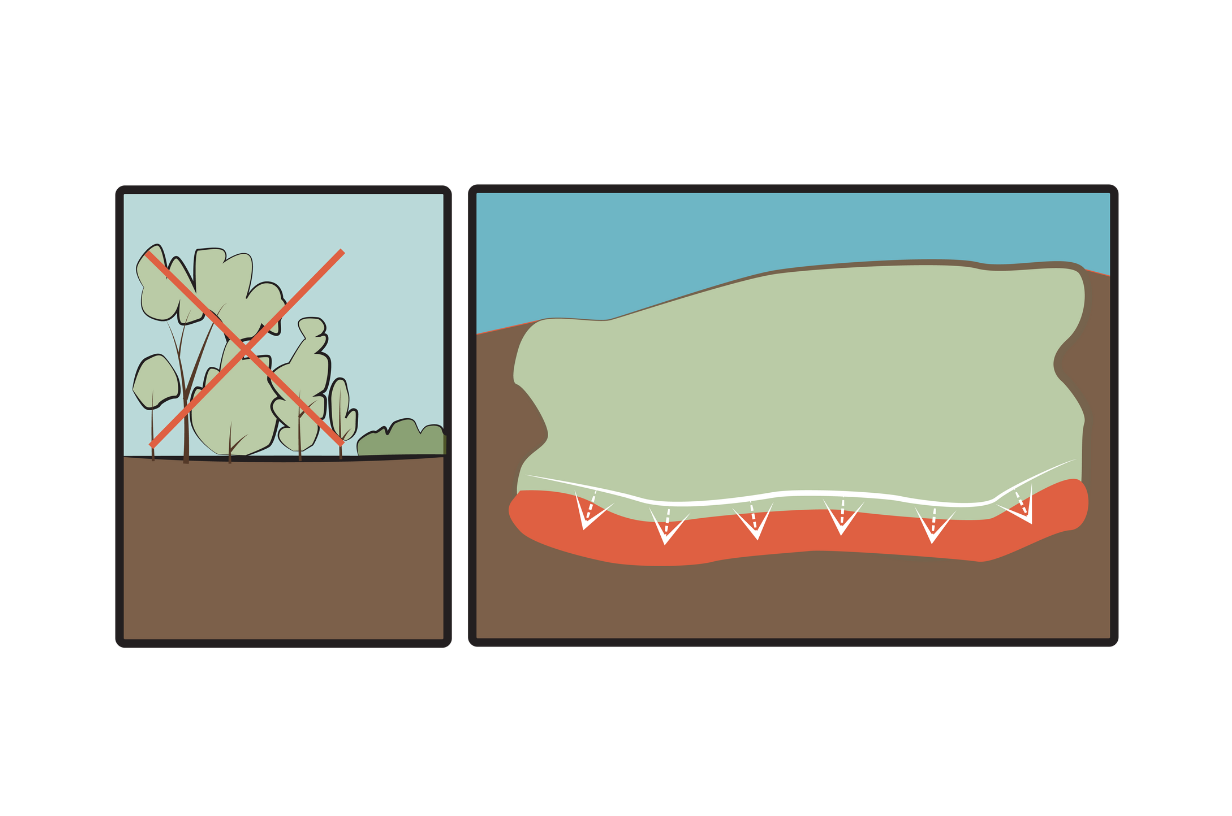
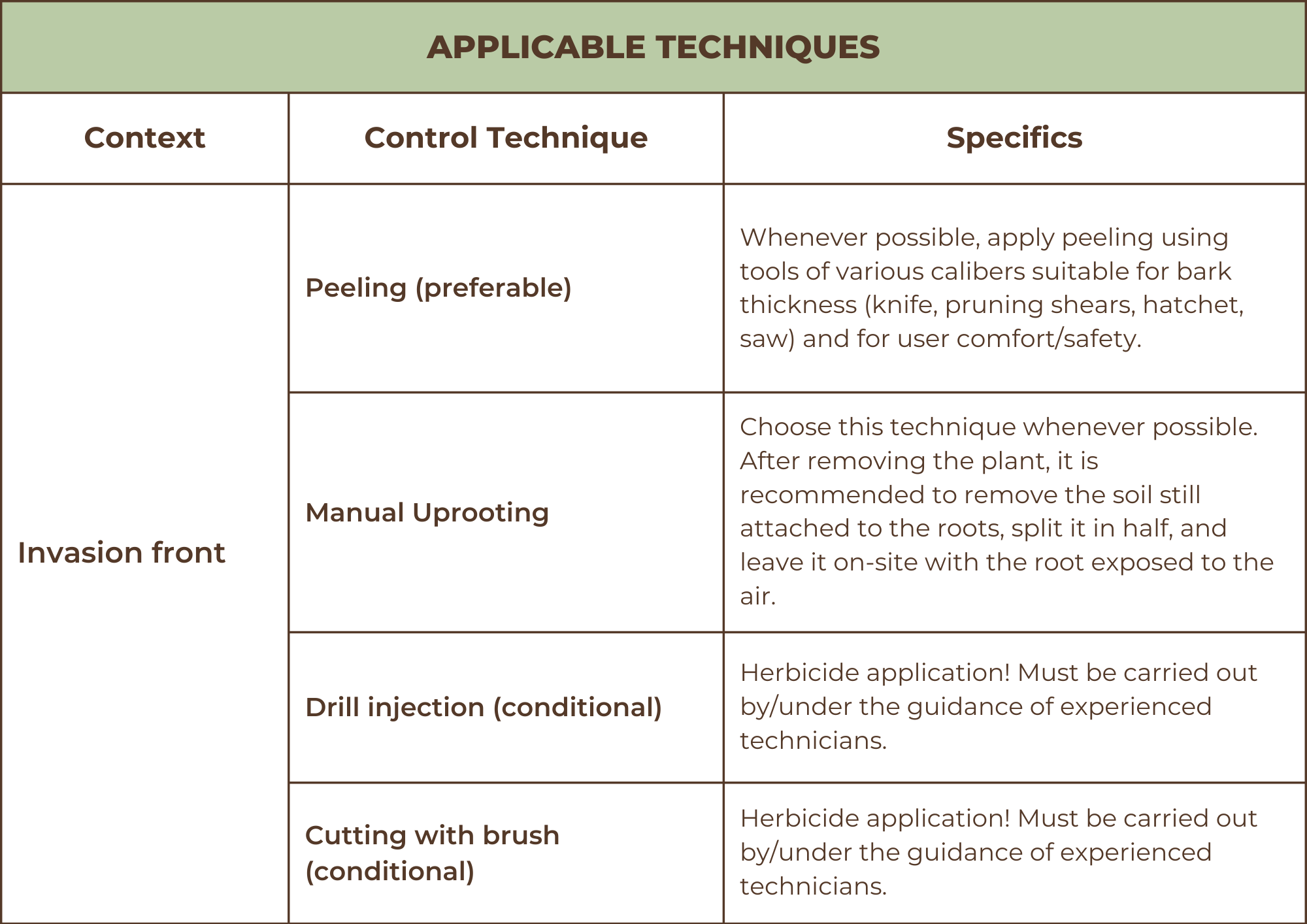
This form of intervention is characterized as “mass control,” which usually involves teams with a larger number of volunteers. Since the original habitat is extremely degraded or nonexistent in these heavily invaded areas, the risk of trampling does not pose a threat. The primary focus of the intervention should be on larger or medium-sized individuals that are already seed producers or are very close to producing the first flowers and, consequently, seeds.
BEWARE!
❌ Avoid stepping on or disturbing threatened or more sensitive flora
❌ Do not leave the collected invasive plants in contact with the soil
❌ Do not transport invasive plants from the removal site
❌ Do not transport seeds or plants with seeds
❌ Cut/thin only as much as necessary to reach the main trunk
❌ Be especially careful of the presence of rooting branches in the ground.
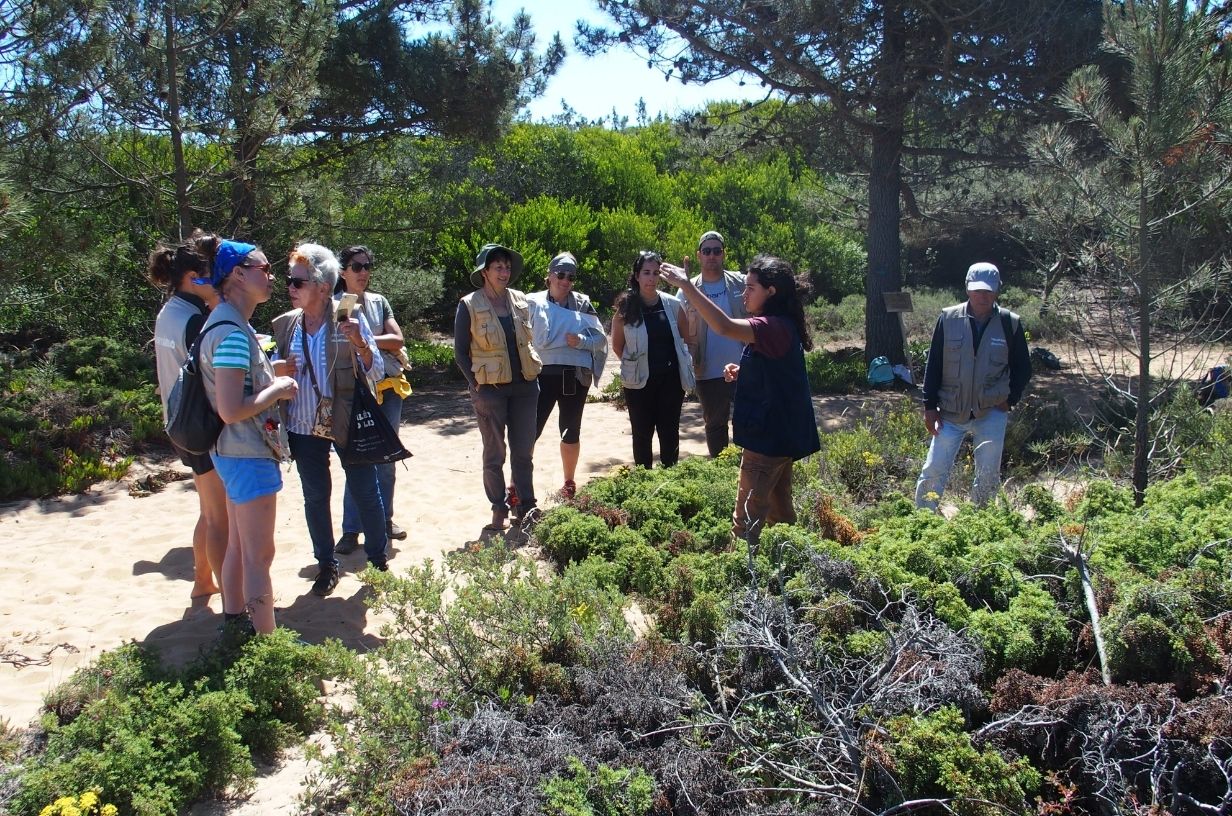
During the LIFE Volunteer Escapes post-project phase, teams of short-term volunteers dedicate some of their time helping to protect endemic flora and are fundamental to perpetuate the work that began in 2018.
To all the volunteers who join Rota Vicentina’s nature conservation activities, I extend a special thanks for their effort and dedication.
Graduated in Landscape Architecture, she has always been connected to Nature. Leonor loves plants, music, crafts, drawing and walking. The Alentejo is your home.
Our suggestions
Search by category
